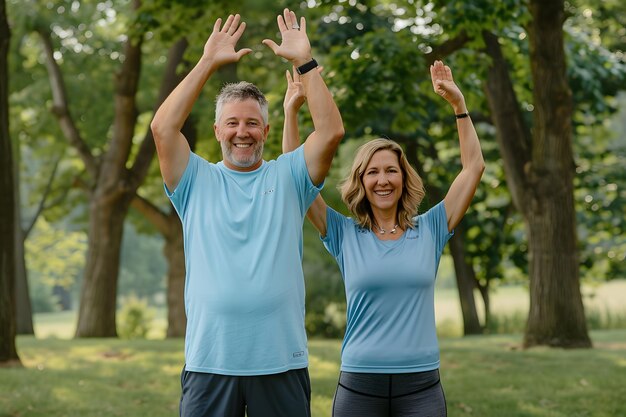
Senior Fitness & Prevention: What the Research Shows and Why It Matters After 60
Staying active and preventing decline aren't the same thing — but they're closely connected, especially as you get older. Senior fitness and prevention is the area of health and wellness focused on how physical activity, strength, balance, and related habits interact with aging bodies to reduce risk, maintain function, and support quality of life. It sits within the broader category of Senior Health & Benefits, but where that category covers the full landscape of older adult wellbeing — insurance, chronic disease management, mental health, care options — this sub-category zeroes in on the physical dimension: what the body can do, how to preserve and build on that, and what getting ahead of problems actually looks like in practice.
The distinction matters because the decisions here are different. They're not primarily about coverage or diagnosis. They're about movement, capacity, and timing — and they involve trade-offs that depend heavily on where a person is starting from.
Why Fitness in Later Life Works Differently Than It Did Before
The physiology of aging changes the rules of the game in ways that aren't always obvious. After roughly age 30, the body begins a gradual process of losing muscle mass — a condition researchers call sarcopenia when it becomes clinically significant. By the time most people reach their 60s or 70s, this process has been underway for decades, and its effects on strength, metabolism, and stability are measurable.
At the same time, bone density typically declines with age, a process that accelerates after menopause in women and continues more gradually in men. Joints become less resilient. The cardiovascular system loses some of its adaptive capacity. Proprioception — the body's ability to sense its own position in space — tends to decline, which contributes to balance problems and fall risk.
None of this is destiny. The research consistently shows that physical activity can slow, and in some cases partially reverse, many of these changes. But the mechanisms matter. What works for cardiovascular health isn't necessarily the same as what addresses bone density or fall prevention. Understanding which goal you're working toward — and which systems are most relevant — shapes everything about how to approach it.
The Four Domains Researchers Focus On
Most of the evidence in senior fitness organizes around four functional domains, each with its own considerations:
Cardiovascular endurance involves the heart, lungs, and circulatory system's ability to sustain effort over time. Research consistently associates regular aerobic activity with lower rates of cardiovascular disease, better metabolic function, and reduced risk of certain chronic conditions. The evidence base here is among the strongest in all of preventive medicine, drawn from decades of large observational studies and numerous controlled trials — though observational studies can't always rule out confounding factors like overall health status.
Muscular strength and mass are increasingly recognized as central to healthy aging in ways they weren't always framed. Strength training — also called resistance training — has a substantial evidence base for preserving muscle mass, supporting bone density, improving insulin sensitivity, and maintaining the functional capacity needed for everyday tasks. Research in this area has grown significantly in the past two decades, and expert consensus from organizations like the American College of Sports Medicine reflects its importance for older adults specifically.
Balance and coordination form the foundation of fall prevention, which is one of the highest-stakes areas in senior health. Falls are the leading cause of injury-related death among older adults in the United States, and a significant body of research supports targeted balance training — including programs like tai chi and specific physical therapy protocols — as meaningful tools for reducing fall risk. The evidence for multi-component exercise programs (those combining strength, balance, and flexibility) is generally stronger than for any single approach alone.
Flexibility and mobility affect range of motion, posture, and the ability to move without pain or restriction. While this domain has a less robust evidence base than the others — fewer large randomized trials, more reliance on observational and clinical data — it remains a practical factor in function and injury prevention, particularly in the context of how the other three domains interact.
What "Prevention" Actually Means Here 🛡️
Prevention in this context operates at several levels, and the differences are worth understanding.
Primary prevention means reducing the risk of a condition or event before it occurs — for example, building bone density to reduce future fracture risk, or maintaining cardiovascular health to lower the likelihood of a cardiac event.
Secondary prevention means detecting or addressing early-stage problems before they become serious — such as identifying and correcting gait instability before a fall happens, or managing prediabetes through lifestyle before it progresses.
Tertiary prevention — sometimes called rehabilitation — involves managing existing conditions to limit their progression or impact. For someone already dealing with osteoporosis, arthritis, or a previous fall, the goal isn't to prevent the condition but to preserve function and quality of life.
Most people over 60 are working across all three levels simultaneously, which is part of why the decisions in this sub-category are genuinely complex. The same person may need to prevent new problems, manage existing ones, and recover from a past event — and the right approach to each of those layers may look different.
The Variables That Shape Outcomes
Research findings describe populations and probabilities, not individuals. Several factors meaningfully influence what applies to any given person:
| Variable | Why It Matters |
|---|---|
| Current fitness baseline | Starting point determines appropriate intensity and progression |
| Existing health conditions | Certain diagnoses affect what's safe, effective, or contraindicated |
| Medications | Some medications affect heart rate response, balance, or bone metabolism |
| Prior injury or surgery | Affects joint loading, movement patterns, and recovery capacity |
| Bone density status | Shapes appropriate exercise selection and intensity |
| Fall history | Prior falls are a significant predictor of future falls |
| Living situation | Affects access to facilities, supervision, and social support |
| Goals and preferences | Affects adherence, which drives long-term outcomes more than program design alone |
The interaction between these variables is why two people of the same age with the same general goal can need quite different approaches. Aerobic exercise that's appropriate and beneficial for one person may be genuinely risky for another, depending on cardiovascular history. Resistance training loads that support bone density in one individual may be contraindicated in someone with a recent compression fracture.
What the Spectrum Looks Like in Practice 🏃
It's worth naming the range of where people start when they engage with this topic, because the landscape looks very different from different entry points.
Some people come to senior fitness as a continuation of a lifelong active lifestyle — managing the adjustments that aging requires, adapting programming that used to work but now needs modification. For them, the questions tend to center on how to preserve capacity, avoid overuse injury, and adjust as their bodies change.
Others are re-entering physical activity after years of relative inactivity — sometimes prompted by a health event, a diagnosis, or a doctor's recommendation. For them, starting points matter enormously, and the evidence strongly supports beginning gradually and building progressively, with close attention to how the body responds.
Still others are addressing specific clinical concerns — recovering from a fall, managing osteoporosis, working through post-surgical rehabilitation, or dealing with a chronic condition like heart failure or chronic obstructive pulmonary disease that requires medically supervised exercise programming. In those cases, the overlap between fitness and clinical care is significant, and the guidance of qualified professionals becomes more central, not optional.
The Questions This Sub-Category Explores
Within senior fitness and prevention, there are natural questions that draw readers into more specific territory. How much physical activity do older adults actually need, and how does that compare to general population guidelines? What does the research show specifically about strength training for people over 70, and how does that differ from recommendations for younger adults? What evidence supports fall prevention programs, and how do different types of interventions compare?
There's also the question of how to exercise safely with common conditions — whether that's managing joint pain from arthritis, adapting activity after a cardiac event, or navigating exercise with diabetes. Related to this is the question of what role physical therapy plays as distinct from general fitness — when rehabilitation is the right framework versus when general exercise programming applies.
Nutrition's relationship to fitness outcomes in older adults is another active area of research, particularly around protein intake and its role in preserving muscle mass — an area where the evidence has shifted meaningfully in recent years toward recommending higher intake than older guidelines suggested, though specific recommendations depend on individual health status. Vitamin D and bone health, the relationship between sleep and physical recovery, and the cognitive benefits associated with aerobic activity are all topics where the evidence base is substantial enough to take seriously, while still being honest about its limits.
Finally, there's the practical side: how to find qualified instruction, what to look for in fitness programming designed for older adults, and how to evaluate whether a program or approach is grounded in evidence rather than marketing. These questions don't have universal answers — but understanding what to look for, and what questions to ask, is itself a meaningful form of preparation.
What This All Comes Down To
The research on senior fitness and prevention is genuinely encouraging. Physical activity in later life has one of the strongest evidence bases in all of preventive medicine — not because every question is settled, but because the signal across many different types of studies, populations, and conditions points consistently in the same direction. Movement preserves capacity. Strength training matters more than many older adults have been told. Falls are more preventable than they're often assumed to be.
What the research can't do is tell any individual reader exactly what their situation calls for. The factors that shape outcomes in this sub-category are real, varied, and interact in ways that depend on circumstances no general resource can fully account for. That's not a reason to disengage — it's a reason to use what the evidence shows as a starting point, and to bring specific circumstances, history, and goals into the conversation with the people best positioned to help apply it.