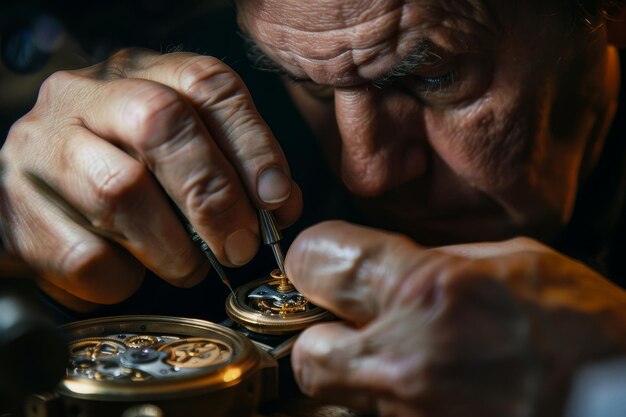
Watch Repair Basics: What You Need to Know ⌚
Whether your watch has stopped working, lost time, or simply needs maintenance, understanding the fundamentals of watch repair can help you make informed decisions about care and service. This guide explains how watches work, what commonly goes wrong, and what to consider when repair becomes necessary.
How Watches Work: The Essential Picture
A watch is a precision instrument with hundreds of tiny parts working in concert. Mechanical watches rely on a wound spring (mainspring) that gradually releases energy through a series of gears and escapements, creating the steady tick that marks time. Quartz watches use a battery to power a quartz crystal oscillator, which vibrates at a precise frequency and drives the hands electronically. Automatic watches are mechanical watches that wind themselves through the wearer's wrist motion.
Each type has different service needs because their internal systems operate on fundamentally different principles.
Common Watch Problems and What Causes Them 🔧
Stopped or slow timekeeping can stem from:
- A depleted battery (quartz watches)
- A worn or dirty mainspring (mechanical watches)
- Misaligned or damaged escapement components
- Magnetization of metal parts, which disrupts precise movement
Moisture inside the case occurs when the water-resistance seal deteriorates over time, allowing condensation or water to enter. This is one of the most common reasons for corrosion and component failure.
Loose or broken hands happen when the connection between the hand and its post weakens or the post itself fractures.
Damaged crystal (the watch face cover) compromises water resistance and exposes internal components to dust and debris.
Non-functioning complications like date windows, chronographs, or GMT functions may involve separate mechanisms that can fail independently from the timekeeping movement.
When to Seek Professional Repair
Most watch problems require professional attention. Attempting repairs without training risks:
- Introducing dust or moisture into sealed mechanisms
- Damaging delicate balance wheels or hairsprings beyond recovery
- Disrupting precise calibration
- Voiding any remaining warranty
You can safely handle:
- Replacing watch batteries (though some sealed watches require professional opening)
- Changing watch straps or bands
- Cleaning the exterior case with a soft cloth
- Storing the watch in a dry, stable temperature environment
What Happens During Professional Service
When you take a watch to a qualified repair specialist, the typical service process includes:
| Step | Purpose |
|---|---|
| Examination | Assess overall condition, identify problems, estimate repair scope |
| Movement removal | Carefully extract the internal mechanism from the case |
| Disassembly | Separate components for inspection and cleaning |
| Cleaning | Remove old lubricants, dust, and corrosion using specialized solvents |
| Replacement | Install new parts where damage warrants it (worn gaskets, broken posts, etc.) |
| Reassembly | Reconstruct the movement with precise alignment |
| Adjustment & testing | Regulate timekeeping accuracy, test water resistance, verify all functions |
| Reassembly into case | Return the movement to the watch case with fresh seals |
The depth of service varies. A simple service might address basic cleaning and adjustment. A complete overhaul disassembles everything and replaces wear items. The right choice depends on the watch's age, condition, and how often you wear it.
Key Variables That Shape Repair Costs and Timeline
Watch type and age: Vintage watches and mechanical movements often require more detailed work than modern quartz models. Finding specific parts for older pieces takes longer.
Extent of damage: A battery replacement differs vastly from rebuilding a worn escapement or replacing a corroded mainspring.
Availability of parts: Common watches have readily available replacement components. Limited-production or discontinued models may require specialty sourcing or custom fabrication.
Watchmaker expertise: A general jeweler may handle basic battery changes and band replacements. Complex mechanical repairs demand someone with specialized training and tools.
Movement complexity: Simple three-hand watches service faster than chronographs, GMT functions, or perpetual calendars with multiple interconnected systems.
Preventive Care: What Extends Watch Life
Regular maintenance reduces the likelihood of major repair needs:
- Have mechanical watches serviced every 5–10 years, depending on wear frequency and manufacturer guidelines
- Maintain water-resistant seals by avoiding exposure to water if the watch isn't rated for it, and having seals checked regularly
- Store unworn watches in a cool, dry place away from magnetized objects and extreme temperature swings
- Keep battery-operated watches from running completely dead, which can cause leakage inside the case
- Avoid sudden impacts that can crack the crystal or jostle internal components out of alignment
Finding a Qualified Watch Repair Professional
Not all jewelers or repair shops have the same skill level. Look for:
- Certified watchmakers with training from recognized horological institutions
- Transparent communication about what they'll repair and estimated costs before work begins
- Proper tools and workspace designed for precision work (you can't service watches properly on a kitchen table)
- Experience with your specific watch type or brand
- Warranty or guarantee on completed repairs
Ask questions about their process, turnaround time, and whether they'll replace parts or attempt to restore originals. The answer reflects their philosophy and skill.
Understanding Your Options
Your situation—the age of your watch, your attachment to it, whether it's an everyday tool or heirloom piece—shapes what approach makes sense. A reliable quartz watch you wear daily may be worth a simple repair. A mechanical watch with sentimental value might justify a complete restoration. A discontinued model might need specialist sourcing that takes months.
The goal is matching the repair scope and cost to what the watch means to you and how you'll use it going forward. A knowledgeable watchmaker can help you weigh those factors once they've assessed what's actually wrong.