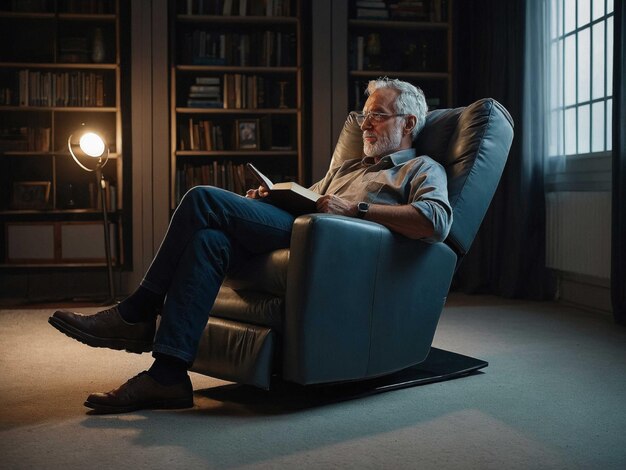
Choosing the Right Recliner for Senior Back Pain: What Actually Matters
Back pain affects many older adults, and the right recliner can make a real difference in comfort and daily function. But "best" depends entirely on your specific condition, body type, and how you spend your time. Here's what you need to know to evaluate options for your situation.
How Recliners Help (and Why Design Matters) 🪑
A recliner supports your back by allowing you to recline gradually rather than collapse into a slouch. When you're upright in a poor chair, your lower back (lumbar spine) curves unnaturally, straining muscles and ligaments. When you recline properly, your spine can extend more naturally, reducing pressure on discs and nerve roots.
The key: support works only if the chair's lumbar curve matches your spine's natural curve. A chair that's too flat won't help. One with the wrong curve angle might make things worse.
The Core Features That Influence Comfort
| Feature | Why It Matters | Variables That Affect What You Need |
|---|---|---|
| Lumbar support | Prevents excessive lower-back strain | Severity of pain; whether you have disc issues, arthritis, or muscle tightness |
| Seat depth | Too deep leaves you unsupported; too shallow doesn't cradle properly | Your leg length and torso proportions |
| Recline angle and control | Gradual recline (vs. sudden drops) reduces strain; control matters if mobility is limited | Whether you have hip or knee issues; if you need motorized vs. manual |
| Armrests | Distribute weight and reduce strain on shoulders and lower back when sitting down or standing up | Upper-body strength and mobility; arthritis in shoulders or elbows |
| Seat cushion firmness | Too soft collapses support; too firm causes pressure points | Personal preference and whether you have sensitive areas (coccyx, hips) |
| Footrest position | Legs elevated at or slightly above hip height reduces lower-back load | Whether you have circulation, swelling, or orthostatic hypotension concerns |
Three Common Recliner Profiles
Manual recliners use a hand lever or pull strap. You control the angle yourself. Pros: no batteries, simpler mechanics. Cons: require grip strength and mobility; can't fine-tune position easily. Better for seniors with good upper-body strength.
Power recliners with remote control let you adjust position at the touch of a button. Pros: excellent for limited mobility; some models heat or massage. Cons: higher cost; depend on electricity and batteries. Better for those with arthritis, limited strength, or who adjust position frequently.
Lift recliners (power recliners with a motorized chair lift) tilt you forward as they stand, easing the strain of rising from a seated position. These address a specific need: difficulty standing without using arms. Relevant if that's a real problem for you; not necessary otherwise.
What Varies by Individual Situation
Your ideal recliner depends on answers only you can provide:
- Where's your pain? Lower back, upper back, and sacroiliac problems each respond differently to support and recline angles.
- What movements cause flare-ups? Do you struggle sitting down, standing up, staying in one position, or all three?
- How much mobility do you have? Can you pull a lever, or do you need a remote? Can you lift your legs, or does weight distribution matter more?
- What's your budget and space? Power recliners cost more and need outlet access. Some models are bulkier. Trade-offs exist.
- Will a professional evaluate this? A physical therapist or doctor familiar with your condition can recommend specific support angles.
Questions to Ask Before Buying
- Can you test the recliner in a showroom for at least 10–15 minutes to feel how your back responds?
- Does the lumbar curve feel like it supports your natural spine shape, or does it feel like it's pushing you into an unnatural position?
- Can you adjust the angle and footrest independently, or are they locked together?
- If motorized: What's the warranty on the motor and controls? (Mechanical failure is common in power recliners.)
- Does the upholstery breathe, or will it trap heat during long sitting sessions?
When Professional Input Helps
If your back pain is severe, persistent, or caused by a specific condition (herniated disc, spinal stenosis, arthritis), a physical therapist can assess your posture and recommend specific support features. They may even suggest whether a recliner is the right tool for your situation—some people benefit more from a firm, upright chair paired with additional pillows.
Your doctor can also clarify whether any movement (like motorized lift-assist) might affect circulation or other health factors unique to you.
The right recliner exists for your situation—but it's only right when it matches your pain patterns, your mobility, and your lifestyle.