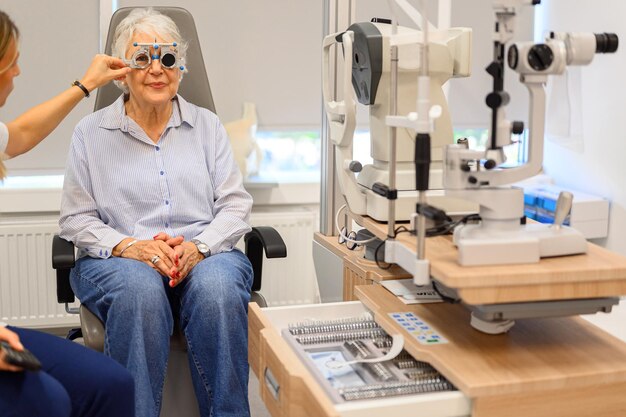
Senior Vision Exam Packages: What's Included and How to Choose 👁️
A comprehensive vision exam for seniors goes well beyond reading an eye chart. These packages are designed to detect age-related eye conditions early, assess your ability to perform daily tasks safely, and update prescriptions for glasses or contacts. Understanding what's typically offered—and what varies between providers—helps you make an informed choice about your eye care.
What's in a Standard Senior Vision Exam?
A complete vision exam for seniors usually includes several interconnected assessments:
Visual acuity testing measures how clearly you see at different distances. This is the familiar "which is better—one or two?" portion of an exam.
Refraction assessment determines whether you need glasses or contact lenses, and if so, what prescription strength will give you the clearest vision.
Eye pressure measurement (tonometry) screens for glaucoma, a condition that often develops without symptoms but can lead to vision loss if untreated. This is especially important for seniors, whose glaucoma risk increases with age.
Dilated eye exam involves drops that widen your pupils, allowing the eye doctor to inspect the retina, optic nerve, and blood vessels at the back of your eye. This is critical for detecting age-related macular degeneration, diabetic retinopathy, and other conditions that may have no early warning signs.
Visual field testing checks your peripheral vision and can reveal blind spots caused by glaucoma or other diseases.
Optical coherence tomography (OCT) is an imaging scan that creates detailed cross-sections of the retina. Many senior packages now include this non-invasive tool, which helps detect early changes before symptoms appear.
Variables That Shape What You Receive
Not all "senior vision exam packages" are identical. What you get depends on several factors:
Your insurance coverage. Medicare Part B covers an annual "Welcome to Medicare" preventive eye exam in your first year of eligibility, plus one routine eye exam every 24 months after that (with some exceptions for certain conditions). Private insurance plans vary widely in what they cover, including whether they require copays or coinsurance. Some plans cover advanced imaging; others don't.
Where you go. Optometrists, ophthalmologists, and retail vision centers may offer different test combinations. Ophthalmologists (medical doctors specializing in eye care) can perform surgical interventions; optometrists typically focus on refraction and disease detection. Both are qualified to conduct comprehensive exams, but their available equipment and in-house services differ.
Your personal risk factors. If you have diabetes, a family history of glaucoma, or previous eye problems, your provider may recommend additional tests beyond a basic package—and these might not be bundled into a standard "package" price.
Age and health status. Seniors in their 70s and 80s, especially those with multiple health conditions, sometimes need more frequent or detailed monitoring than newly retired 65-year-olds.
Common Package Tiers
Many providers structure senior exams into levels:
| Tier | Typically Includes | Best For |
|---|---|---|
| Basic/Routine | Acuity, refraction, tonometry, dilated exam, visual field | Seniors with no known eye disease or risk factors |
| Comprehensive | Everything above, plus OCT imaging and possibly corneal topography | Seniors with diabetes, glaucoma risk, or age-related eye disease |
| Premium/Advanced | Comprehensive tests plus specialized imaging (fundus photography, retinal analysis) and extended consultation time | Seniors managing multiple eye conditions or seeking detailed baseline documentation |
Keep in mind these are general categories—actual offerings differ by provider and insurance.
What You Should Evaluate for Your Situation
Before scheduling, consider:
Your current eye health and symptoms. Do you have diagnosed conditions like cataracts, glaucoma, or macular degeneration? Are you experiencing floaters, flashing lights, or vision changes? These histories often justify more frequent or intensive screening.
Your insurance limits. Call your plan directly to confirm what exams are covered annually, which tests require prior authorization, and what your out-of-pocket costs might be.
Your ability to reach appointments. Vision exams require dilation, which temporarily blurs your vision for a few hours. You'll need to arrange transportation if you can't drive safely during this window.
Whether you have symptoms or just routine monitoring. Some seniors need annual exams due to risk factors; others may be fine with exams every 1–2 years if no problems exist. Your eye care provider can advise on frequency based on your individual profile.
The Role of Your Medical History
Seniors with conditions like diabetes, high blood pressure, or a family history of eye disease benefit from knowing which tests directly address those risks. Diabetic retinopathy screening, for instance, relies heavily on dilated exams and may include OCT imaging. Glaucoma monitoring centers on pressure measurement and visual field tests. Your provider should explain why specific tests are recommended for you, not just which package you're "getting."
Vision changes are common as you age, but they're not inevitable or untreatable. A clear exam package tailored to your needs and risk profile is one of the most straightforward ways to catch problems early, when intervention is most effective. 🔍