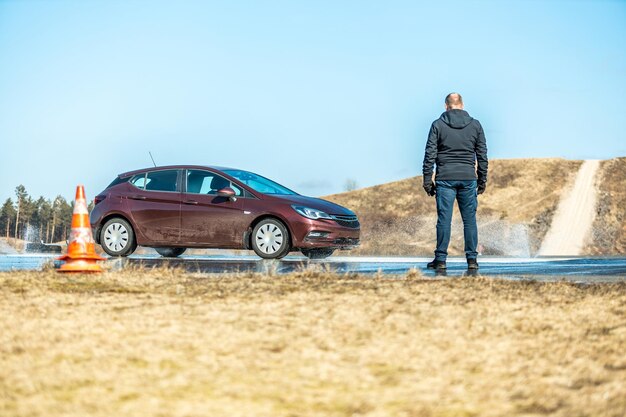
Understanding Roadside Assistance: Coverage, Services, and What to Know Before You Need Help
When your car breaks down on the highway at midnight, or you lock your keys inside your vehicle in an unfamiliar neighborhood, roadside assistance is the service designed to get you help quickly. But "roadside assistance" covers far more ground than most drivers realize—and understanding what it actually includes, how it works, and what factors shape your experience is essential to knowing whether you have the coverage you need.
This guide walks you through the landscape of roadside assistance: what it covers, how different service models operate, the variables that affect your outcomes, and the specific questions you'll want to answer about your own situation.
What Roadside Assistance Actually Is
Roadside assistance is a service that dispatches help to your vehicle when you experience a mechanical breakdown, collision, or other emergency while driving. Unlike auto insurance—which covers damage and liability—roadside assistance focuses on getting your car mobile again or transported safely so you can continue your journey.
The distinction matters. Your auto insurance policy might cover damage from a collision, but it won't pay for a tow truck to arrive within an hour. Roadside assistance does that job. It's a separate service layer, sometimes bundled with insurance, sometimes purchased independently, sometimes included as a membership benefit through credit card companies, auto clubs, or employers.
The core purpose is straightforward: rapid response and immediate help. But the details—what "help" means, how fast it arrives, what you pay, and what situations qualify—vary substantially depending on your service plan, your location, traffic conditions, and the nature of your emergency.
How Roadside Assistance Services Operate
Most roadside assistance works through a membership or subscription model. You pay an annual or monthly fee (or it's included in your auto insurance bundle), and in exchange, you gain access to a phone line and dispatcher network. When you need help, you call or use a mobile app, report your location and the problem, and a tow truck or service vehicle is dispatched to you.
The dispatcher collects basic information: where you are, what vehicle you're in, what's wrong, and whether you or your passengers are in any immediate danger. This information is logged and sent to nearby service providers—usually independent tow operators or franchise networks—who accept the job and head to your location.
Response time is a common metric, but it's not a guarantee. Most roadside assistance services promise response within 30 to 60 minutes in urban and suburban areas, with longer windows (sometimes 2+ hours) in rural regions. Response time depends on real-world factors: the density of available service providers near you, current call volume, traffic conditions, and weather. A service provider might be 10 minutes away or 45 minutes away—the service promises to send someone, not to control traffic or dispatcher availability.
Service scope typically includes towing (usually up to a certain mileage—commonly 3 to 7 miles, sometimes more), lockout assistance, jump-starts for dead batteries, fuel delivery if you've run out of gas, tire changes, and in some cases minor mechanical help (like replacing a serpentine belt or getting you unstuck from snow). What falls under "minor" versus requiring a tow is defined by your plan.
The model creates an incentive for providers to reach you quickly and solve the problem on-site if possible. A jump-start takes 15 minutes and costs the service provider far less than a 5-mile tow, so dispatchers prioritize quick fixes.
Key Variables That Shape Your Experience
Your actual experience with roadside assistance depends on several factors that aren't always obvious from the plan description alone.
Geographic location shapes everything. If you live in or frequently drive through dense urban areas, service providers are plentiful, and response times tend to be fast. Rural drivers or those who take long road trips through low-population regions face longer waits—not because the service is failing, but because there are genuinely fewer tow operators available. Some services explicitly exclude certain rural areas or charge different rates for them. If you spend significant time in remote regions, that's a critical variable in which service makes sense for you.
The towing distance limit matters more than many drivers realize. Standard coverage often includes 3 to 7 miles of towing. If your regular mechanic is 15 miles away and your car breaks down, that 7-mile limit means you'll pay out of pocket for the remaining distance—or the provider will tow you to their preferred shop, which may not be your choice. Some premium or regional plans offer 50, 100, or even unlimited miles, which changes the math significantly if you drive long distances or prefer specific repair facilities.
Your vehicle type affects eligibility and service approach. Some roadside assistance plans exclude commercial vehicles, motorcycles, or vehicles above a certain weight. If you drive an older truck or a luxury vehicle with specialized towing requirements, confirm that your plan's tow operators have the right equipment. A provider comfortable with standard sedans might not be set up to handle your specific vehicle.
Time of day and season create variations in response. Weekend nights and holiday periods often see higher call volumes. Winter in snowy regions spikes demand for roadside help. These conditions don't change the service's commitment, but they can mean longer waits simply because dispatchers are busier.
Your membership history and relationship with the service can influence speed and flexibility in practice, though this varies by provider. A customer who has used the service multiple times and has a good track record might receive different treatment than a first-time caller, though policies on this vary.
Whether you're on a major road or off the beaten path affects dispatch speed. A breakdown on Interstate 95 at rush hour means many service providers are already in the area. A breakdown on a rural state route at 2 a.m. might mean a significantly longer wait.
The Spectrum of Service Plans and Coverage Models
Roadside assistance is not monolithic. Understanding the main categories helps you assess what fits your situation.
Bundled insurance coverage is what many drivers have without realizing it. Auto insurers often include roadside assistance as a standard or optional add-on to your policy. This is usually inexpensive (often $3–$15 annually) and covers basic services: towing, lockouts, jump-starts, fuel delivery, and tire changes. The trade-off is limited control—you use the insurer's dispatch network, not necessarily your preferred provider. Coverage limits are often on the lower end (3–7 miles of towing, for example).
Dedicated roadside assistance memberships are standalone services you purchase separately. These often come from auto clubs (AAA is the largest in North America), independent roadside service companies, or regional providers. These plans typically offer more flexibility, higher coverage limits, and the ability to choose which provider reaches you. Annual costs range from $50 to $150+ depending on coverage level and provider.
Credit card and employer benefits sometimes include roadside assistance as a cardholder or employee perk. These vary widely in coverage and require you to follow specific procedures (calling a dedicated number, using their app, or registering in advance). This type of benefit is worth verifying—many people don't realize they have it.
Premium or higher-tier plans extend coverage distances, add services (like reimbursement for rental cars, hotel stays if stranded overnight, or trip interruption coverage), and sometimes reduce or eliminate wait-time restrictions. These cost more but appeal to frequent drivers or those in remote areas.
Regional or provider-specific plans are available in certain areas through local towing companies or cooperative networks. These can offer excellent value if you stay within their service area but provide no coverage outside it.
The right model depends on how often you drive, how far, where you go, and what you value. A commuter in a dense urban area with a reliable older car might get by with basic bundled insurance coverage. Someone who takes frequent road trips or lives in a rural area needs a more comprehensive plan with higher towing limits.
What Roadside Assistance Does and Doesn't Cover
Understanding the boundaries of coverage is essential. Roadside assistance covers mechanical breakdowns (engine failure, transmission problems), lockouts (you're locked out of your car), dead batteries, flat tires, running out of fuel, damage from minor incidents (you slide into a ditch or have a minor fender-bender that leaves you stranded), and towing to a repair facility.
What it typically does not cover: damage from major collisions (that's an insurance claim), multiple callouts for the same problem within a short period (some plans have limits on repeat claims), services for vehicles you don't own unless you're a named driver, or coverage for breakdowns caused by extreme neglect (like driving 50,000 miles past an oil change interval). If your engine fails because you never changed the oil, some services might refuse coverage, though enforcement of this varies.
Services also don't typically cover the cost of repairs themselves—they cover getting you to a repair facility. If your transmission fails and needs a $3,000 replacement, roadside assistance covers the tow; your own money or insurance covers the repair.
Limitations on frequency exist with some plans. If you call roadside assistance four times in a month, some providers might decline the fifth call or charge you out of pocket, on the assumption that a pattern of breakdowns indicates a maintenance problem rather than an emergency. This is more common with lower-cost plans.
Questions That Shape Your Decision
To assess whether a roadside assistance plan fits your needs, your specific circumstances matter. Consider:
How far do you typically drive from home? If you rarely leave a 10-mile radius, basic coverage with low towing limits works. If you regularly drive 50+ miles or take cross-country trips, higher towing limits and national coverage become essential.
What's your vehicle's reliability history? Newer, well-maintained cars break down less frequently, so basic coverage might suffice. Older vehicles or those with known mechanical issues make higher coverage limits more valuable.
How often are you on the road during off-peak hours? Late-night and rural-area breakdowns have longer response times; if this is your reality, consider a plan with explicit expectations for these scenarios.
Do you have a preferred repair shop? Some roadside assistance plans limit where they'll tow you (often to a particular network of approved shops). If you have a trusted mechanic, confirm the plan works with that facility before purchasing.
What's your tolerance for out-of-pocket costs if stranded? Basic plans might limit your towing distance or response time. Higher-tier plans with extended towing and faster response cost more upfront but reduce emergency expenses later.
Do you live in or drive through areas with limited service availability? Rural or mountainous regions need different coverage than urban corridors.
What backup do you have? If roadside assistance is unavailable or delayed, can you handle a multi-hour wait? Do you have a spare vehicle? Cash for a hotel if stranded overnight? These factors influence how comprehensive your coverage needs to be.
The Role of Technology and Modern Expectations
Most roadside assistance services now operate through mobile apps alongside traditional phone numbers. Apps let you request help, track the service provider's location in real time, and sometimes communicate directly with the dispatcher. This transparency is relatively new and has reshaped expectations—many drivers now expect to know when help will arrive, not just that it's coming.
Technology has also enabled predictive analytics for some services. Providers can analyze breakdowns by vehicle model, age, and weather patterns to anticipate surges in demand and pre-position tow trucks. This improves response times in high-probability situations but doesn't eliminate waits during unexpected crises or in areas where coverage is naturally sparse.
However, technology hasn't eliminated the core constraint: there are only so many tow trucks in any given area at any given moment. An app showing a 45-minute wait is honest information, but it's still a 45-minute wait.
Understanding Evidence and Variability
Research on roadside assistance satisfaction shows that response time is the strongest predictor of customer satisfaction, but actual response times vary far more than providers' stated averages suggest. Studies of call-to-arrival times show that while average response might be 45 minutes, individual waits can range from 15 to 120+ minutes depending on location, time, and conditions. This variability is normal and largely stems from the nature of emergency services—you can't control when emergencies happen or where they happen relative to available help.
Satisfaction also correlates strongly with clarity of expectations. Customers who understand their plan's limits and real-world constraints report higher satisfaction than those surprised by a 90-minute wait or a towing distance limitation they didn't know about. This underscores the importance of reading plan details before you need them, not during an emergency.
What Happens When You Actually Need It
When you call roadside assistance, the dispatcher typically asks four things: your location (GPS coordinates or description), what's wrong with your vehicle, whether you're safe (on a shoulder or in a dangerous spot), and which repair facility or destination you'd like to be towed to. This information is immediately sent to nearby providers.
The service provider contacts you directly, confirms the details, and heads your way. You're usually asked to stay with your vehicle (unless it's unsafe) and to keep your phone available. When they arrive, the operator assesses the situation, attempts a fix if it's within scope (jump-start, tire change, lockout), or arranges a tow if needed.
In many cases, the first-arrival operator can resolve your problem on-site, and you're back on the road in 20 to 45 minutes. If a tow is needed, you're either invited to ride along or, depending on the distance and your preference, directed to arrange your own transportation while the vehicle is towed to a shop. Some services will arrange a rental car or rideshare credit if you're stranded.
The entire interaction is usually free at point of service (no payment to the operator; it's covered by your membership), though you'll owe payment for any services beyond what your plan covers (additional towing distance, repairs, parts, rental cars if not included).
Your Situation Determines What Fits
Roadside assistance is genuinely useful, but its value depends entirely on how well the plan matches your actual driving patterns, geography, and needs. A driver in dense suburban areas with a reliable vehicle and limited long-distance driving might find basic bundled coverage sufficient and adequate. The same coverage would leave someone who drives remote highways for work or pleasure seriously underprotected.
Conversely, paying for premium national coverage with unlimited towing when you rarely leave your home county is money spent on protection you're unlikely to use. The optimal plan is the one that covers the scenarios you'll realistically encounter and fails to cover scenarios you won't—nothing more, nothing less. That calculation is specific to your circumstances: where you drive, how often, what vehicle you own, and what you can afford to pay in an emergency.
Understanding the mechanics, scope, and variables outlined here gives you the foundation to make that assessment clearly.