What Are the Most Effective Fishing Methods? 🎣
Effective fishing isn't about finding one magic technique—it's about matching your approach to the fish species, water conditions, and your own goals and resources. Different methods work in different situations, and success depends on understanding how each one functions and which variables matter most for your circumstances.
How Fishing Methods Work
Fishing method refers to the technique you use to present bait, lures, or flies to fish. Each method relies on different principles: some exploit fish behavior through movement and vibration, others rely on natural feeding patterns, and still others use specialized equipment to access specific water types.
The core mechanics are consistent: you're presenting food or a food-like object to a fish in a way that triggers a strike. What changes is how you present it, where you present it, and what you're targeting.
Major Fishing Method Categories
| Method | How It Works | Best For | Key Variables |
|---|---|---|---|
| Casting with lures | You cast artificial lures and retrieve them, mimicking prey movement | Active fish, diverse species | Lure type, retrieve speed, water clarity |
| Baitcasting or spin fishing | You present live or dead bait on a hook, often with weight | Still water, bottom-feeding fish | Bait type, presentation depth, water temperature |
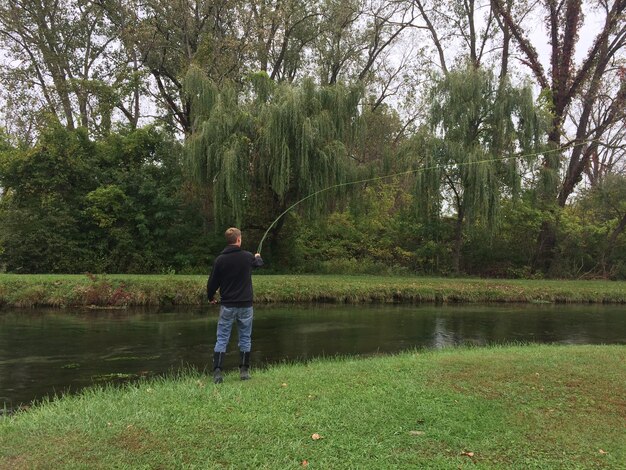
| Fly fishing | You cast a weighted line with a fly imitation, landing it delicately | Trout, salmon, saltwater species | Fly pattern, water current, visibility |
| Trolling | You tow lures or bait behind a moving boat | Open water, larger fish | Speed, depth, water temperature patterns |
| Netting or trapping | Passive methods using nets, traps, or weirs | Specific regulations and contexts | Mesh size, placement, water flow |
Variables That Shape Method Effectiveness
Fish species and behavior matter enormously. Largemouth bass respond differently to lures than trout do. Catfish hunt primarily by smell, while pike hunt by sight and movement. What works in summer may fail in winter because fish metabolism and feeding intensity change with water temperature.
Water conditions determine visibility and accessibility. Murky water may favor baited methods that rely on smell; clear water often favors lures that mimic natural prey. Fast-moving streams require different techniques than still ponds. Depth, current, and structure all shape which methods you can realistically use.
Your equipment and skill level influence what you can execute well. Fly fishing has a learning curve; spin casting is more forgiving for beginners. The gear you own or can access limits which methods are practical.
Local regulations often restrict certain methods entirely—some waters prohibit live bait, others ban trolling or require catch-and-release protocols. Knowing what's legal and required in your area is non-negotiable.
Time and patience matter. Some methods are active and exploratory; others require waiting. Your available time and temperament influence which approaches fit your day.
General Best Practices Across Methods
- Match the conditions. Observe water temperature, clarity, time of day, and season. These shape fish behavior more reliably than any single technique.
- Start with what's legal and common. Local fishing guides and regulation summaries show what works in your specific water.
- Experiment within a method. Rather than switching methods entirely, vary speed, depth, lure color, or bait type to refine your presentation.
- Learn fish feeding patterns. Most fish have predictable times and depths where they hunt. Early morning and low-light periods often increase activity.
- Practice casting and presentation. The best technique fails if your presentation is sloppy. Accuracy and smoothness matter.
What You Need to Evaluate for Your Situation
The "most effective" method depends on whether you're targeting a specific species, fishing a particular water type, working within time constraints, or pursuing a personal challenge like fly fishing skill. A method that excels in one context may be impractical or illegal in another.
Consider what you want from the experience—consistent catches, learning a new skill, or pursuing a specific challenge—because that shapes which method deserves your focus and practice time.